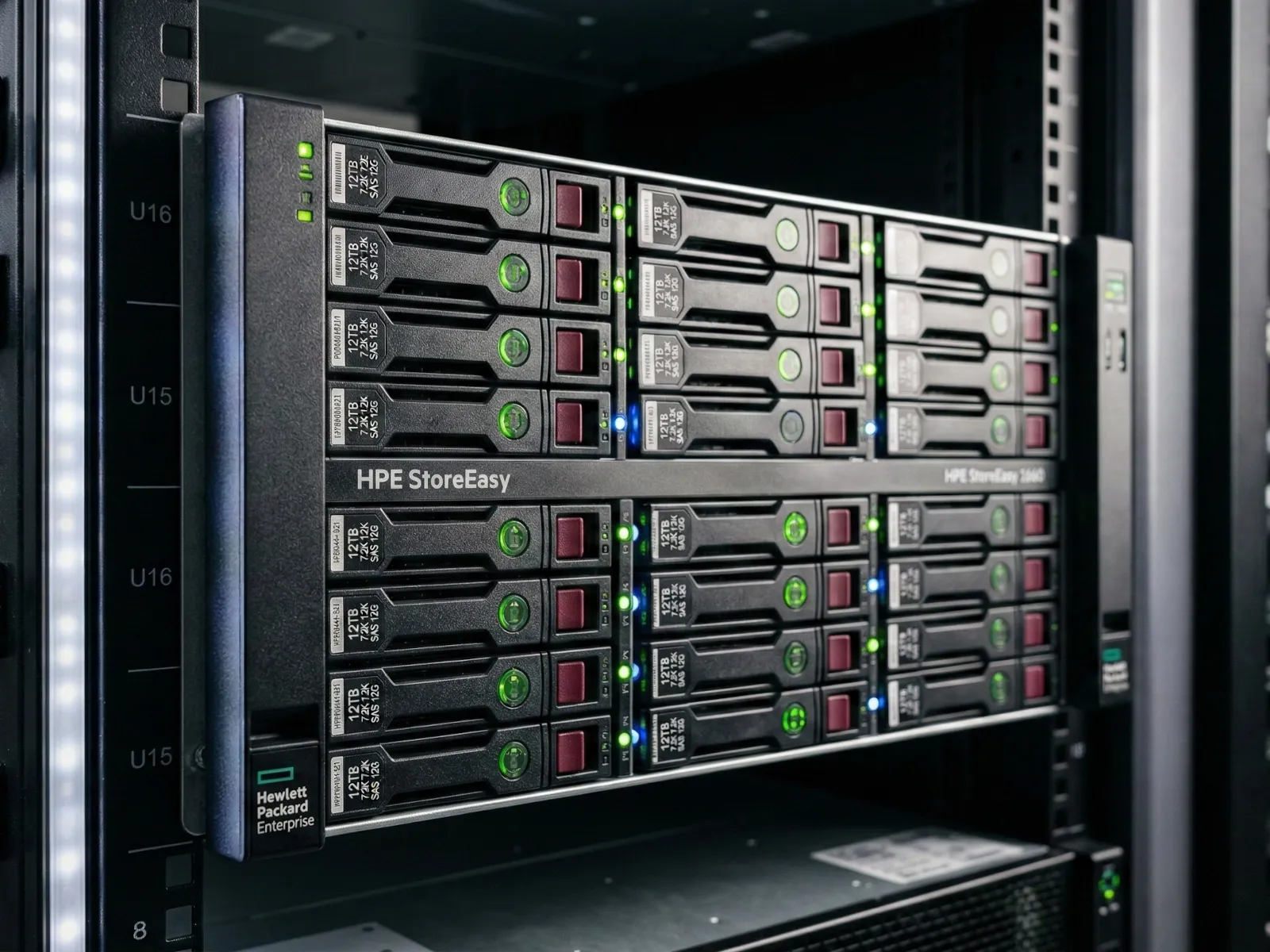
Many organizations searching for HPE StoreEasy end of life are trying to determine one thing: how much time is left before support fully expires.
HPE StoreEasy end of support dates vary by model, purchase date, and region. However, as the Gen 7 family ages, many systems are either already discontinued or approaching final support milestones.
If you are searching for:
- HPE StoreEasy end of life date
- HPE StoreEasy end of support date
- HPE StoreEasy support expiration
The correct next step is to validate your specific serial number against HPE lifecycle documentation. Do not assume that partial support still includes firmware and security patch eligibility.
Once HPE StoreEasy reaches full end of life, hardware replacement guarantees and vendor escalation pathways are typically removed.
HPE StoreEasy 1470 End of Support Considerations
Organizations running HPE StoreEasy 1470 systems often deployed them in edge locations or smaller rack environments.
If you are researching HPE StoreEasy 1470 end of support, consider:
- Whether the 1U chassis is nearing hardware fatigue
- Current firmware revision status
- Disk lifecycle and SMART reporting health
- Backup dependency mapping
The HPE StoreEasy 1470 replacement path is usually straightforward due to its smaller footprint and capacity profile.
HPE StoreEasy 1570 End of Life Planning
The HPE StoreEasy 1570 tower NAS was frequently deployed in branch offices and non-rack environments.
When searching HPE StoreEasy 1570 end of life or HPE StoreEasy 1570 support options, many organizations are evaluating whether to:
- Replace with another tower NAS
- Migrate file services to cloud storage
- Consolidate into centralized storage
Branch deployments often benefit from cloud file services or hybrid synchronization models rather than direct hardware refresh.
HPE StoreEasy 1670 and 1870 Support Expiration Risk
Higher-capacity models such as the HPE StoreEasy 1670 and HPE StoreEasy 1870 introduce more complexity during lifecycle transitions.
Searches for:
- HPE StoreEasy 1670 support expiration
- HPE StoreEasy 1870 end of support
- HPE StoreEasy 1870 replacement options
Usually come from environments with significant data volumes and heavier IOPS requirements.
For these deployments, migration planning should include:
- Data growth projections
- Replication strategy
- Downtime window modeling
- Performance validation in the target platform
These systems often sit deeper in production environments, making proactive planning more critical.
Technical Comparison of HPE StoreEasy Versus Modern Alternatives
Below is a simplified comparison to illustrate where HPE StoreEasy stands relative to modern storage approaches.
| Capability | HPE StoreEasy Gen 7 | Modern NAS Platforms | Cloud File Storage |
|---|---|---|---|
| Vendor Support Lifecycle | Approaching or at end of support | Active lifecycle | Fully managed |
| Security Patch Cadence | Limited or expired | Ongoing | Provider-managed |
| Hardware Scalability | Fixed chassis | Modular and flash-integrated | Elastic |
| Cloud Integration | Limited hybrid options | Native tiering and sync | Built-in |
| Performance Ceiling | Hardware constrained | NVMe and flash acceleration | Scalable by design |
| Capital Investment Model | Capex heavy | Capex or hybrid | Opex-based |
HPE StoreEasy was designed for a different era of storage demand. Modern workloads require elasticity, stronger security postures, and deeper cloud integration.
HPE StoreEasy Replacement and Upgrade Options
Long tail search traffic around HPE StoreEasy replacement and HPE StoreEasy upgrade options is increasing as more Gen 7 systems age out.
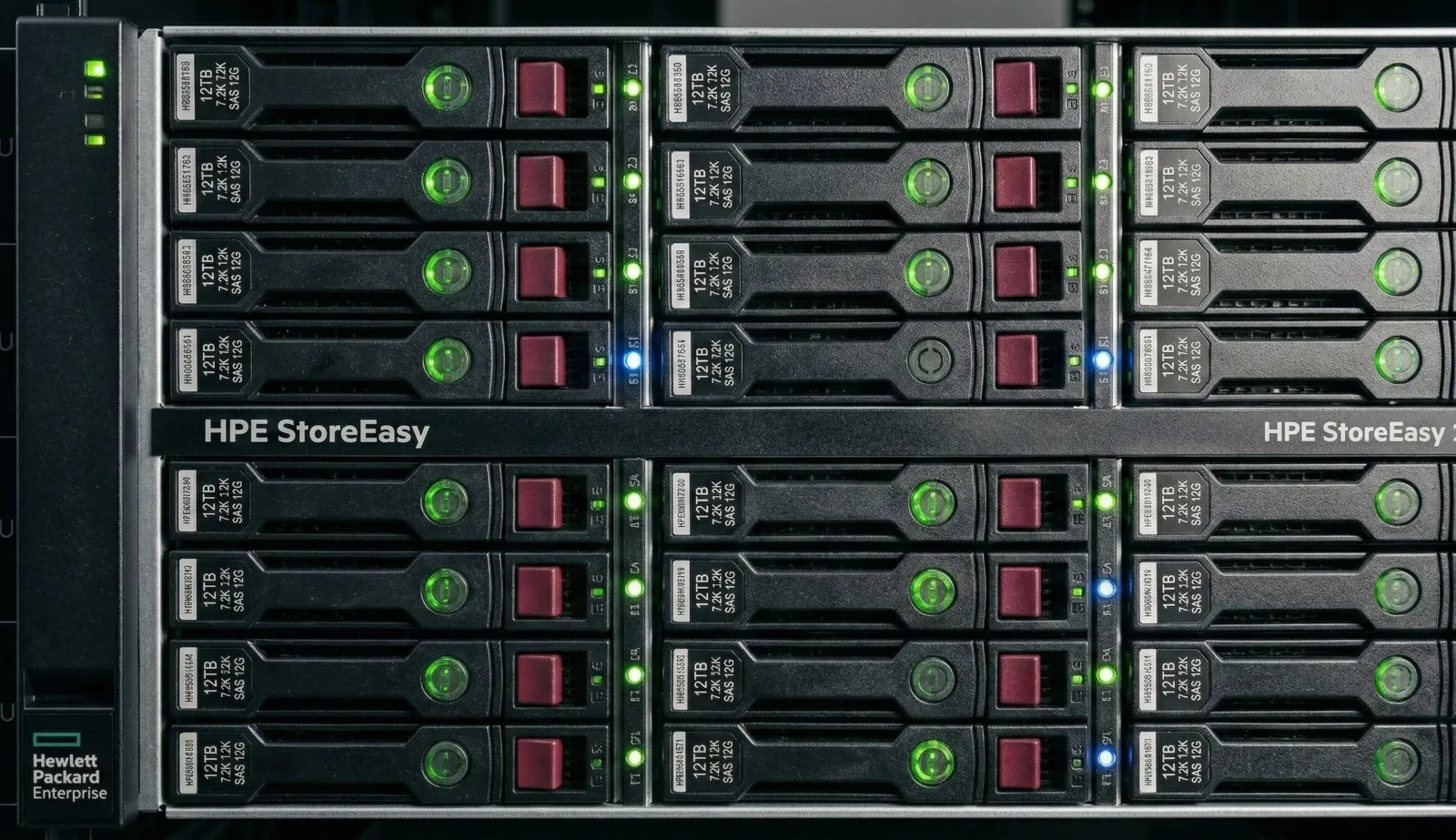
Organizations evaluating HPE StoreEasy replacement typically fall into one of three categories.
- Those moving to modern on-prem NAS with flash acceleration and longer vendor lifecycle.
- Those migrating file workloads to cloud-native services such as Azure Files or AWS FSx.
- Those adopting hybrid architectures that allow gradual offload of aging hardware.
If your search intent includes HPE StoreEasy support alternatives, third-party maintenance can temporarily extend hardware life. However, this does not modernize architecture or eliminate security exposure tied to aging operating systems.
Signs It Is Time to Replace HPE StoreEasy
If you are searching phrases like HPE StoreEasy problems, HPE StoreEasy hardware failure, or HPE StoreEasy upgrade path, watch for these indicators:
- Frequent disk alerts or controller warnings
- Firmware no longer supported
- Security patch gaps
- Capacity running above 80 percent utilization
- Backup jobs extending beyond acceptable windows
These are leading indicators that the platform is approaching operational limits.
Strategic Outlook for Organizations Running HPE StoreEasy
Search behavior around HPE StoreEasy end of support is increasing because organizations recognize that aging file storage cannot remain static forever.
The longer HPE StoreEasy systems remain in production past their supported lifecycle, the more reactive the eventual migration becomes.
A structured assessment today allows organizations to control:
- Budget allocation
- Migration timeline
- Architecture modernization
- Security hardening
Storage lifecycle management is not about replacing hardware for the sake of replacement. It is about reducing compounded risk over time.
Extend HPE StoreEasy Support with ReluTech Third Party Maintenance
If your HPE StoreEasy environment is approaching end of support but you are not ready to migrate immediately, you still have options.
ReluTech provides third-party maintenance for aging storage platforms, including HPE StoreEasy systems such as the 1470, 1570, 1670, and 1870 models.
Instead of rushing into a hardware refresh under pressure, ReluTech allows you to:
- Maintain operational stability beyond OEM support deadlines
- Reduce annual maintenance costs compared to manufacturer contracts
- Gain flexibility while planning a structured migration
- Avoid forced upgrade decisions
ReluTech third party maintenance helps organizations extend the useful life of HPE StoreEasy infrastructure while building a long-term modernization roadmap.
If you are evaluating HPE StoreEasy end of support or researching HPE StoreEasy replacement options, a maintenance bridge strategy can provide time, budget flexibility, and operational continuity.
Connect with ReluTech to assess your current HPE StoreEasy environment and determine whether third-party maintenance or a structured migration plan makes the most strategic sense for your organization.